Focused ultrasound for glioblastoma: what our review examines
A research summary of the Strickland team’s review of focused ultrasound, drug delivery, and immune responses in glioblastoma.
Strickland Brain Tumor Immunology Lab
Medical University of South Carolina
Led by neurosurgeon Dr. Ben Strickland in Charleston, South Carolina, our lab studies glioblastoma immunotherapy, focused ultrasound, and the biology of treatment resistance.
Investigating immunosuppressive properties of the glioblastoma microenvironment to identify actionable therapeutic targets.
Exploring differential epigenetic programs that drive glioblastoma progression, therapeutic resistance, and immune evasion.
Engineering precise immunotherapy treatments for glioblastoma not amenable to surgical intervention.
150+
Peer-Reviewed Publications
5
Active Research Programs
4
Lab Members
3
Institutional Partners
Ventricular entry and postoperative leptomeningeal metastasis after resection of supratentorial high-grade glioma.
Abi Faraj C, McCutcheon IE, Strickland BA, et al.
J Neurosurg. 2026 Feb 13:1-15.
Ventricular entry (VE) during resection can maximize high-grade glioma (HGG) resection, but it remains unclear whether tumor contiguity to the ventricles or VE increases the risk of leptomeningeal metastasis (LM) and/or worsens overall survival (OS). To clarify the role of VE and tumor location in LM incidence and OS, the authors retrospectively reviewed the charts of patients who underwent their first resection of supratentorial HGG at The University of Texas MD Anderson Cancer Center between 1993 and 2021. The authors identified 884 patients: 390 (44%) had VE and 444 (50%) had ependymal contact (EC) tumors. On multivariate analysis, VE did not significantly predict LM or OS. However, EC significantly increased LM risk and worsened OS. Tumors with EC predict higher LM risk and shorter OS, while VE during resection does not increase LM risk or worsen OS. Surgeons can use VE to maximize resection of supratentorial HGGs without increasing the risk of subsequent LM.
February 12, 2026
New publication on ventricular entry and leptomeningeal metastasis
Multi-institutional study on postoperative outcomes after resection of supratentorial high-grade glioma published in the Journal of Neurosurgery.
Read moreJanuary 14, 2026
Focused ultrasound review published in Brain Stimulation
Bell, Walton, et al. publish comprehensive review on engineering focused ultrasound approaches for glioblastoma therapy.
Read moreOctober 31, 2025
Lab presents at Society for Neuro-Oncology Annual Meeting
Multiple poster presentations showcasing our glioblastoma immunotherapy research.
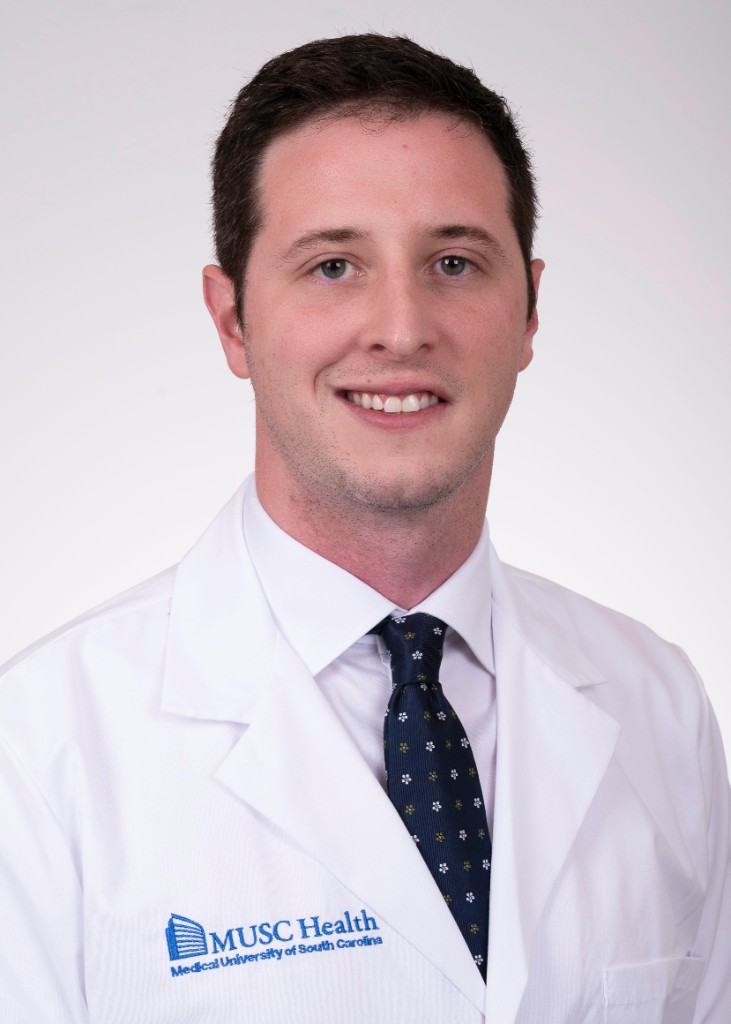
Principal Investigator
Ben Allen Strickland, MD
Assistant Professor, Department of Neurosurgery
Medical University of South Carolina
Hollings Cancer Center
Dr. Ben Allen Strickland's major area of clinical interest is brain, skull base, and pituitary surgery. His practice incorporates a variety of endoscopic and minimally invasive open neurosurgical techniques as well as stereotactic radiosurgery.
We are actively recruiting motivated researchers to join our team at MUSC.
Research questions, new publications, and the science behind our work.
A research summary of the Strickland team’s review of focused ultrasound, drug delivery, and immune responses in glioblastoma.
How Dr. Ben Strickland’s lab at MUSC studies tumor-associated macrophages and the immune environment of glioblastoma.
A plain-language summary of an 884-patient retrospective study coauthored by Dr. Ben Strickland on ventricular entry during high-grade glioma surgery.